Translate

Friday, March 19, 2021

The Case For Miracles; A Book Review

 After walking through the evidence, theology, and philosophy of the Bible, I began to look more at the supernatural aspects. A journey I’m still on. I’ve often said we’ve taken the magic out of the world. 

Former atheist and investigative reporter, Lee Strobel, investigates to see if it’s gone or if it never left. 

“Lee Strobel trains his investigative sights on whether it’s credible to believe God intervenes supernaturally in people’s lives today.

This book starts with an unlikely interview in which America’s foremost skeptic builds a seemingly persuasive case against the miraculous. But then Strobel travels the country to quiz scholars to see whether they can offer solid answers to atheist objections. Along the way, he encounters accounts of healings and other phenomena that simply cannot be explained away by naturalistic causes. The book features the results of exclusive new scientific polling that shows miracle accounts are much more common than people think.

What’s more, Strobel delves into the most controversial question of all: what about miracles that don’t happen? If God can intervene in the world, why doesn’t he do it more often to relieve suffering?”

I have the hard copy, so instead of quotes, I’ll go over the table of contents. 

Strobel first interviews Dr. Michael Shermer of Skeptic magazine for the case against miracles. For thirty-four pages, the case is built against them.

Following that is an interview with Dr. Craig S. Keener. Keener wrote a heavily-footnoted two-volume set titled Miracles: The Credibility of the New Testament Accounts. That’s a total of 1,172 pages and 620,000 words. 

To say he knows his stuff is an understatement. He makes a case for miracles. 

In Part 3, Lee interviews Dr. Candy Gunther Brown and Missionary Tom Doyle on Miracles’ Science and Dreams and Visions. 

Part 4 is about the most spectacular miracles. Strobel interviews Dr. Michael G. Strauss about the miracle of creation, the universe, and the planet. Then he interviews my favorite detective, J. Warner Wallace, on the Resurrection. 

Then he addresses the difficulties of miracles. The Embarrassed by the Supernatural chapter where he interviews Dr. Roger E. Olson is a good one. In fact, I’ll type this passage on pages 221-222.

“I asked Olson if there’s one word that could summarize why a lot of evangelical Christians seem embarassed by the supernatural.

He gave it some thought and then said, “Respectability.”

“Why that word?” I asked.

“Evangelicals in general are trying to live down our past,” he replied. “We’re very aware of Hollywood’s version of us-the oddball preacher, the phony faith healer, the hypermotivational revivalist, the money-grubbing hypocrite. We want to run from those depictions. We want our neighbors to see us as normal people who aren’t very different from them. We are desperate to fit in.”

“So,” I said, “we divorce ourselves from the supernatural, since it seems odd to the world.” 

“That’s right. We want to show that we’re cultured and refined, that we’re not gullible or superstitious, that we’re not like the over-the-top fanatics that our neighbors see on television. In fact,” he added, “my experience is that the richer and more educated evangelicals become, the less likely they are to really expect miracles to happen.”

I’ll say again, it’s an excellent chapter. The next chapter is an interview with Dr. Douglas R. Groothuis on when miracles don’t happen. 

He doesn’t speak from a podium but from the trenches. His wife is dying, and her mind is slipping from fibromyalgia. They’re seeking a miracle that hasn’t happened. It’s personal.

That’s the closing interview of the book. I give it 5 stars and wrote this on Goodreads. “Easy to read and very clear. Lee starts by interviewing skeptic Michael Shermer to build a case against miracles. Then he interviews people to build the case for miracles, even touching on when prayers aren’t answered.

Overall a very good book.”

Monday, March 15, 2021

The Gradual Road To Hell

 I don’t know why I’m ever surprised when people intentionally or unintentionally blow it. We are human, after all. Even a world-famous evangelist can turn out to be a sexual predator. 

I’m less concerned with that right now than I am with human nature. The heart is deceitful above all things; who can know it? The weeping prophet, Jeremiah, said that while he watched his country spiral into self-destruction. 

Jesus said you will know people by their actions. Some people are really good at hiding the rotten ones. No one is perfectly good. 

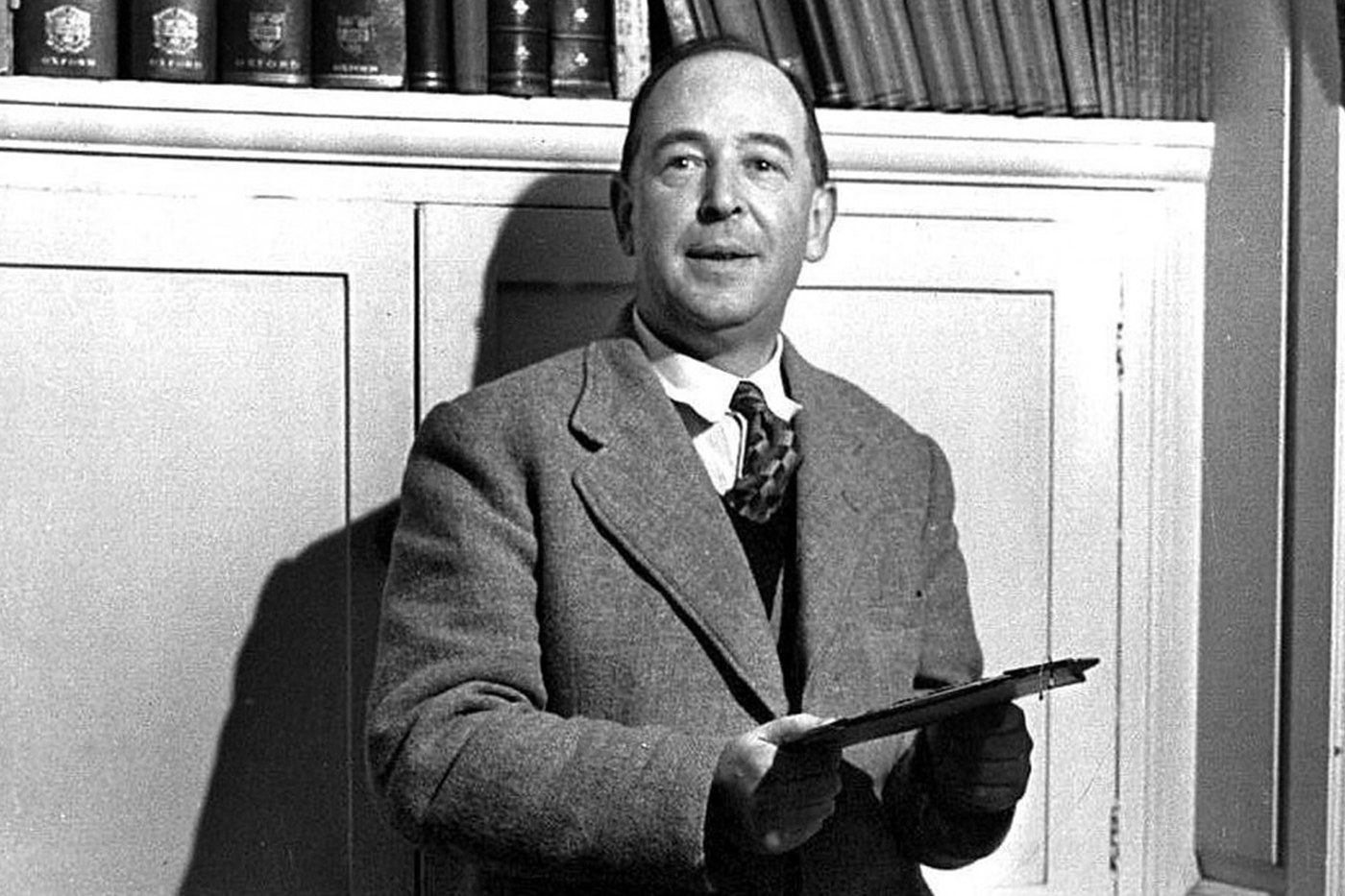
Let’s time travel and talk to C.S Lewis about human nature. I’ll be quoting from Mere Christianity and The Screwtape Letters.

Vance: Mr. Lewis, tell me about Christian morality.

C.S Lewis: “People often think of Christian morality as a kind of bargain in which God says, ‘If you keep a lot of rules, I’ll reward you, and if you don’t, I’ll do the other thing.’ I do not think that is the best way of looking at it. I would much rather say that every time you make a choice, you are turning a central part of you, the part of you that chooses, into something a little different from what it was before. 

And taking your life as a whole, with all your innumerable choices, all your life, you are slowly turning this central thing either into a heavenly creature or into a hellish creature.”

V: Any hope for us?

C.S: “Each has done something to himself which, unless he repents, will make it harder for him to keep out of the rage the next time he is tempted and will make the rage worse when he does fall into it. Each of them, if he seriously turns to God, can have that twist in the central man straightened out again: each is, in the long run, doomed if he will not.

When a man is getting better, he understands more and more clearly the evil still left in him. When a man is getting worse, he understands his own badness less and less.”

Good and evil both increase at compound interest. That is why the little decisions you and I make every day are of such infinite importance. The smallest good act today is to capture a strategic point from which, a few months later, you may be able to go on to victories you never dreamed of. An apparently trivial indulgence in lust or anger today is the loss of a ridge or railway line or bridgehead from which the enemy may launch an attack otherwise impossible.”

V: Even the little decisions?

C.S: “Indeed, the safest road to Hell is the gradual one-the gentle slope, soft underfoot, without sudden turnings, without milestones, without signposts.”

Even the slightest compromise opens you up to negotiations—a boundary that is unenforced, and as such, not a boundary. 

It is fitting, I would say, to pray this dangerous prayer that King David did:

“Search me, God, and know my heart; test me and know my anxious thoughts.

See if there is any offensive way in me, and lead me in the way everlasting.”

Friday, March 12, 2021

Mere Christianity; A Book Review

 What is the number one bestseller in Christian Literature and Art? Is it from a hot new author? Nope.

It’s a book written by an Englishman who gave a series of radio broadcasts during WWII that became a book. A book that has influenced countless people and the go-to recommended reading for Christians.

“Mere Christianity is C.S. Lewis’s forceful and accessible doctrine of Christian belief. First heard as informal radio broadcasts and then published as three separate books – The Case for Christianity, Christian Behavior, and Beyond Personality – Mere Christianity brings together what Lewis saw as the fundamental truths of the religion. Rejecting the boundaries that divide Christianity’s many denominations, C.S. Lewis finds a common ground on which all those who have Christian faith can stand together, proving that “at the center of each there is something, or a Someone, who against all divergences of belief, all differences of temperament, all memories of mutual persecution, speaks the same voice.”

In the chapter called the Invasion, where Lewis contrasts Christianity with Dualism, he says this:

“The difference is that Christianity thinks this Dark Power was created by God, and was good when he was created, and went wrong. Christianity agrees with Dualism that this universe is at war. But it does not think this is a war between independent powers. It thinks it is a civil war, a rebellion, and that we are living in a part of the universe occupied by the rebel.

Enemy-occupied territory—that is what this world is. Christianity is the story of how the rightful king has landed, you might say landed in disguise, and is calling us all to take part in a great campaign of sabotage. When you go to church you are really listening in to the secret wireless from our friends: that is why the enemy is so anxious to prevent us from going.”

Makes going to church feel more dangerous and adventurous, doesn’t it? In other countries, it is dangerous.

In the Perfect Penitent chapter, he writes about repentance in the best way I’ve heard it. 

“In other words, fallen man is not simply an imperfect creature who needs improvement: he is a rebel who must lay down his arms. Laying down your arms, surrendering, saying your sorry, realizing that you’ve been on the wrong track and getting ready to start your life again from the ground floor-that is the only way out of our ‘hole’. This process of surrender-this movement full speed astern-is what Christians call repentance.”

In the section on morality, Lewis explains why we have moral rules.

“In reality, moral rules are directions for running the human machine. Every moral rule is there to prevent a breakdown, or a strain, or a friction in the runnong of that machine.”

I’m struggling to find quotes that won’t become articles in themselves. Here’s one on “loving in the Christian sense.”

“Good and evil both increase at compound interest. That is why the little decisions you and I make every day are of such infinite importance. The smallest good act today is the capture of a strategic point from which, a few months later, you may be able to go on to victories you never dreamed of.”

In his theology section, I highlighted this quote. 

“Once a man is united with God, how could he not live forever? Once a man is separated from God, what can he do but wither and die?”

Later he borrows a parable from George MacDonald that I really enjoy about being a Christian. 

“Imagine yourself as a living house. God comes in to rebuild that house. At first, perhaps, you can understand what He is doing. He is getting the drains right and stopping the leaks in the roof and so on; you knew that those jobs needed doing so you are not surprised. But presently He starts knocking the house about in a way that hurts abominably and does not seem to make sense. What on earth is He up to? The explanation is that He is building quite a different house from the one you thought of-throwing out a new wing here, putting an extra floor there, running up towers, making courtyards. You thought you were going to be made into a decent little cottage: but He is building a palace. He intends to come and live in it Himself.”

I’ll end with that quote. This book is vibrant and in-depth. I just barely scratched the surface of its pages. It can be read time and again, and you’ll find something new. 

It’s a mere Christianity that all denominations agree with. The hall that connects all the rooms that they stay in. If I were to recommend only one book other than the Bible to a person, it would be Mere Christianity. 

For that, it gets six stars of 5.

Monday, March 8, 2021

How Much Credibility Do You Have?

 I was thinking about credibility and how having it is like having money in a bank account. You add and subtract from it by what you do, say, or post. 

Facebook is a great example. If you spam my feed or Messenger with fake news, extremist views, and conspiracy theories, your credibility account is negative. 

An occasional one doesn’t put you in the negative. Neither does having a different opinion than me—a lack of fact-checking will.

I get spammed by videos and articles that I ignore. Why? I don’t have the bandwidth to fact-check, work, study, and take care of my family. 

Life is more peaceful because of it. Especially after I stopped watching 24/7 news many years ago. I scan Reuters and get email digests from the local paper and Disrn, so I am aware, but I’m not consumed by the information.

Then there are those on my Facebook like Dr. Knott. When she posts, and not that often, it’s long and well thought out. Brian posts quotes from what he is reading (and adds to my to-read pile). Pastor Rod rarely posts, but when he does, it’s either about family or church. 

Their credibility accounts are full. 

Why is this important? 

Suppose you use all your credibility in one area and bankrupt it. In that case, it won’t be taken as seriously when you post something else.

It’s wrapped up in the power of reputation.

You can get canceled for something you said years ago when you were younger and dumber. Employers are looking at social media before they hire people. 

I don’t know how well it works for me since a person’s credibility account is based on an individual’s perception. You will still see lots of family pictures, funny memories, memes, and missing person alerts. Occasionally I post a status update.

Once a week, I get serious on Mondays with a blog post. Then on Friday, a book review from the vast well of books I’ve read. 

I do have opinions. That’s what my journal is for. If you really want to know, I may have written about it or you can ask me. I’ll probably tell you it’s complicated.

What does your social media feed look like? Is it biased, emotional, full of buzz words, or is it balanced? Full of cats, coffee, and commas like my editor’s?

Would anyone take you seriously? Why should anyone take you seriously?

Consider that before you post, because one post affects the others. It lets people know how well you think things through.

Think about that.

Friday, March 5, 2021

The Search for Significance; A Book Review

Years ago, my wife was given a book to read. She never finished it. I did, though, at a time I needed it most. I felt utterly worthless. That book is…

“Robert McGee’s best-selling book has helped millions of readers learn how to be free to enjoy Christ’s love while no longer basing their self-worth on their accomplishments or the opinions of others. In fact, Billy Graham said that it was a book that “should be read by every Christian.”

In this re-launch of this timeless classic, you will:

Gain new skills for getting off the performance treadmill

Discover how four false beliefs have negatively impacted your life

Learn how to overcome obstacles that prevent you from experiencing the truth that your self-worth is found only in the love, acceptance, and forgiveness of Christ.”

One of Casey’s highlights reads:

“When we base our security on success and others’ opinions, we become dependent on our abilities to perform and please others. We develop a have-to mentality: I have to do well on this exam (or my security as a good student will be threatened)…” pg 23

“We don’t have to have success or anyone else’s approval. Of course, it would be nice to have success and approval, but the point is clear that Christ is the source of our security; Christ is the basis of our worth; Christ is the only one who promises and never fails.” pg 24

The author then examines four false beliefs, their consequences, and God’s solution for them. 

The Performance Trap’s striving to meet specific standards to feel good about themselves. This leads to perfectionism, fear of failure, manipulation to achieve success, etc. God’s answer? 

“Justification means that God not only has forgiven me of my sins but also granted me the righteousness of Christ. Because of justification, I bear Christ’s righteousness, and I am therefore fully pleasing to the Father (Romans 5:1).” pg 27

The Approval Addict’s desire to be approved by certain others leads to fear of rejection. It attempts to please others at any cost, among other things. It sounded like when I was in school. It looks a lot like social media.

God’s answer is Reconciliation. 

“Reconciliation means that although I was at one time hostile toward God and alienated from Him, I am now forgiven and have been brought into an intimate relationship with Him. Consequently, I am totally accepted by God (Col. 1:21-22).” pg 27

The Blame Game thinks that those who fail (including themselves) are unworthy of love and deserve to be punished. They fear punishment, punish others, and blame others for their personal failure in the drive to avoid failure. 

God’s answer…

“Propitiation means that by His death on the cross Christ satisfied God’s wrath; therefore, I am deeply loved by God (1 John 4:9-11).” pg 27

Shame feels like they cannot change and are hopeless. God’s answer…

“Regeneration means that I am a new creation in Christ (John 3:3-6).” pg 27

It’s a combination of workbook and book, so if any of these resonate with you, I urge you to get the book. Work through the issues. 

I give this book 4 stars. 

Monday, March 1, 2021

Black Belt Christianity

 Becoming a mature Christian is like being a black belt. 

Now that I have your attention, I actively practiced Wing Chun Kung Fu, Kali, and Jeet Kune Do in what seemed like a lifetime ago. I was learning how to do the techniques. 

After you learn the movements, you can start to refine them. I can get into a stance, but it’s not refined enough to be stable or fast. It was usually one or the other. 

So you practice getting it right, and it usually doesn’t look like you’re doing anything because the shifts are so small. 

It’s the same with your growth as a Christian. The big word is sanctification—being purified and set apart. 

You learn how a Christian is supposed to live, and you start doing it. But you don’t want to, at first. Later, you do.

An example: adultery. Simple, don’t cheat on your wife—an explicit physical action. You have learned the technique of not doing that. 

Now it’s being refined. You don’t cheat, but you watch porn. That’s okay, right?

In the Sermon on the Mount, Jesus taught that even the desire to have sex with someone who isn’t your spouse is a sin. 

Refining that technique/growing in maturity is stopping that. 

Not going through the actions is one thing. Jesus raised the bar higher to not even have the intent or desire to do something.

It’s naturally impossible, but through the Holy Spirit, it’s supernaturally possible. 

I can’t murder anyone. That’s explicit in the Ten Commandments. However, Jesus says I shouldn’t even be angry enough to want them dead. 

This anger isn’t a quick flash of anger. That’s natural. No, it’s a seething, brooding bitterness against someone. 

A black belt isn’t a master. They’re simply a beginner that knows all the moves and can perform them. Now they refine them to become like their teacher.

Like the martial artist, a Christian isn’t perfect; they’re striving to be perfect like Jesus. We’re all on different parts of the journey, but we should be a little bit better than we were last week.

Friday, February 26, 2021

When to Walk Away: Finding Freedom from Toxic People; A Book Review

 The book we’re closing February out with is a relationship book. Except, it’s about knowing when to walk away from toxic people. Recently, it seems to have resurged in popularity at my church. 

That book is…

“Your life’s calling is too important to let toxic people take it away. When to Walk Away draws from biblical and modern stories to equip you to handle toxic people in your life and live true to your God-given purpose. 

As Christians, we often feel the guilt and responsibility of meeting the needs of unhealthy people in our lives. Whether a sibling, parent, spouse, coworker, or friend, toxic people frequently seek to frustrate our life’s calling. While you’re seeking first God’s kingdom, they’re seeking first to distract your focus and delay your work. 

Instead of attempting the impossible task of mollifying toxic people, it’s time we dedicate our energy to the only worthwhile effort: completing the work God has given us by investing in reliable people. It’s only when we learn to say no to bad patterns that we can say yes to the good work God has planned for us. 

Drawing from years serving as a pastor, Gary Thomas (bestselling author of Sacred Marriage) looks at biblical examples from the lives of Jesus, Paul, and Nehemiah to give you insightful, biblical takeaways that you can apply right away. You’ll discover how to:

Learn the difference between difficult people and toxic people.

Find refuge in God when you feel under attack.

Discern when to walk away from a toxic situation

Keep a tender heart even in unhealthy relationships.

Grow your inner strength and invest in reliable people.

We can’t let others steal our joy or our mission. It’s time to strengthen our defense, learn to set healthy boundaries, and focus on our God-given purpose. It’s time to know When to Walk Away.”

Another book raised a bit of cognitive dissonance inside me when I read it in 2019. That was a year I was really struggling with burnout at times. 

Let’s get to the quotes. It’s a Kindle book, so I highlighted a lot. 

Who’s a toxic person?

“If someone is getting in the way of you becoming the person God created you to be or frustrating the work God has called you to do, for you that person is toxic.”

“The challenge is that there’s no one exhaustive definition of a toxic person. Certain traits are common: They are often ruled by selfishness and spite. They are usually draining instead of encouraging, and they use people instead of loving them. They are often seemingly addicted to self-righteous, rash judgments and thus frequently fight with people instead of enjoying and appreciating people. They may be jealous of healthy people’s peace, family, and friendships and spend much of their time and effort trying to bring people down to their level of misery rather than blessing others with joy and encouragement. They often want to control you, and it may feel as if they just want you to stop being you.”

What would Jesus do?

“Sometimes Jesus walked away from others who wanted more of him. On still other occasions, he retreated for his own refreshment and renewal or protection. The point is that Jesus didn’t let the needs, pleas, attacks, or unresponsiveness of others distract him from the mission given to him by his heavenly Father.”

“Here’s the principle that comes from that: Sometimes to follow in the footsteps of Jesus is to walk away from others or to let them walk away from us.”

“…the principle is clear: when truth is rejected, spend your time on those who will receive it instead of begging closed-hearted people to reconsider.”

“Jesus wasn’t moved by either standing ovations or jeering ridicule. He was truly Lord of his life. Neither should we allow the neediness of others or the toxicity of others to determine where, when, and how we spend our time. Neediness can be a subtle form of toxicity. Our spiritual radar goes way up when someone forcefully attacks us, but a passive-aggressive neediness can slip in unawares and steal our attention even more effectively than a full-frontal assault. If someone is trying to control you, that itself is toxic. Whether they use force or guilt, direct attack or unreasonable neediness (“You’re the only one who can help me, and you have to help me now”), it’s still all about control. Controlling someone (or letting yourself be controlled) is wrong.”

This is only 12% through the book. At the 49% mark, there’s this reminder:

“God is radically for people. He wants everyone to come to a knowledge of the truth (1 Timothy 2:4). As his followers, we also must be for everyone, even if we oppose what they’re doing. If we must live and work with toxic people, our call is to make sure their toxicity doesn’t become ours. We don’t treat them as they treat us. We don’t offer evil in exchange for evil. We love. We serve. We guard our hearts so that we are not poisoned by their bad example.”

Remember that the next time you post or scroll through social media.

I’ll close with this quote about why Christians are mean.

“Dallas Willard was once asked why Christians are so mean. He responded by saying that Christians tend to be mean to the degree that they value being right over being like Christ. The two aren’t mutually exclusive, of course, but we can make them that way when instead of receiving the words of Jesus and the writings of Paul as love letters from God to those who are chosen and loved, we use them as verbal weapons to wage war against people who don’t yet believe. I don’t want you to rush by that last sentence. God’s directives and “rules” in the New Testament aren’t intended to be verbal grenades that we lob at people who don’t believe. When someone doesn’t accept Jesus’ authority, we can’t expect them to listen to what the Bible teaches. When God has won over our hearts, we understand that his revealed words regarding appropriate behavior are birthed in love and ultimately given for our best interests. We won’t love God’s words until we first love God, so keep first things first. Taunting people even with the truth can become toxic in a controlling sort of way. It’s still taunting. Methods matter.”

The book deals with when others are toxic and when you’re unhealthy. 5 stars. Now I have to reread it. My reread pile is as big as my to-read pile.