A big issue with information online is who people are citing as their sources. How do you deal with or think through that?
One of the books I reviewed earlier this year was Tacticsby Greg Koukl from str.org. In it, there is a tactic to deal with the fallacy of expert witnesses. It’s called Rhodes Scholar.
Before I go on, use this against your own opinions before taking on others.
Now appealing to scholarly opinion is a way to make a point. However, it’s not always right. People will weigh in outside their area of expertise, get facts wrong, or philosophical bias distorts their judgment.
I can speak about the Kalam Cosmological Argument for God. I’m sure you could too. However, the weight of Dr. William Lane Craig’s thoughts on it outweighs ours in this regard…it’s his area of expertise.
We could watch a trial on TV; however, Sam’s godmother would have a weightier opinion since she’s a lawyer. My best friend is a retired cop, and he would also have a more educated perspective.
But in my area of expertise, I have the base of knowledge necessary.
The key isn’t what their opinion is. It’s to find out why they have that opinion.
The first part informs, and the second educates.
Ask:
How did they (the expert cited) come to their conclusions?
What are the specific facts?
Are there any biases distorting their assessment?
Then you can see if their conclusions are sound. What an expert believes isn’t as important as why they believe it.
Everyone has an opinion, but is it a well-informed one? Are your opinions well-informed? Or are they a product of your particular echo chamber?
We recently bought a four-bedroom, two-bathroom house that on the website looked great. In real life, it still looked good, with a few minor issues. The home inspector didn’t see anything that set off any alarms.
After we moved in, I started noticing things. Superficial cracks and some not so shallow. Floors had a more notable sag that I couldn’t attribute to the type of foundation.
I texted my friends in a group text, “Jesus was right, who knew?”
In the Sermon on the Mount, at the end of chapter 7, Jesus said, “Anyone who listens to my teaching and follows it is wise, like a person who builds a house on solid rock. Though the rain comes in torrents and the floodwaters rise and the winds beat against that house, it won’t collapse because it is built on bedrock. But anyone who hears my teaching and doesn’t obey it is foolish, like a person who builds a house on sand. When the rains and floods come and the winds beat against that house, it will collapse with a mighty crash.”
I had a structural engineer come out to the house, and a big problem with my foundation is the type of clay it sits on. It expands and contracts more than most.
Like my house, what we build our lives on determines our stability. So it’s crucial in our volatile world that’s increasingly unstable.
Six years ago, I read a book about tying the Bible to today’s culture. In it, I have 142 highlights and 4 notes. If you want to make sense of the intersection of faith and culture, try reading…
Think Christianly: Looking at the Intersection of Faith and Culture
“”Think Christianly, in a compelling and accessible way, equips Christians young and old to engage the culture winsomely, intelligently, and confidently.” – Chuck Colson Jonathan Morrow believes that only when Christians learn to present a compassionate, engaging, and informed voice to our culture can the church again become a place the world turns to for answers. Think Christianly gives church leaders practical tools for helping their congregations thoughtfully engage today’s cultural questions.””
The book’s chapters are interviews with different people about cultural topics. It’s broken into three sections: Understanding Our Intersection, Preparing To Engage, and Areas We Must Engage.
This is the first place I learned about the religion of many Americans—Moral Therapeutic Deism. What’s that?
“The dominant religion of today’s American teenager is Moralistic Therapeutic Deism (MTD), a concept developed by Smith and Denton. Not Protestantism, Catholicism, Islam, Judaism, or Buddhism. Regardless of their professed religion, here is what God looks like to the majority of American teenagers (and again, this sample includes those in conservative Protestant and evangelical churches):
• A God exists who created and orders the world and watches over human life on earth.
• God wants people to be good, nice, and fair to each other, as taught in the Bible and by most world religions.
• The central goal of life is to be happy and to feel good about oneself.
• God does not need to be particularly involved in one’s life, except when God is needed to resolve a problem.
• Good people go to heaven when they die.
God is sort of a nebulous combination of divine butler and cosmic therapist. Smith summarized the approach to life that flows out of this belief system as “be nice and call on God if you need him.”
It should go without saying that it is impossible to navigate the pressures and challenges of adolescent or adult life with such a feeble worldview. More importantly, this is hardly the vision for life that Jesus offers his would-be followers.”
That’s convicting. Am I looking at God like that?
“The simple fact is that core Christian beliefs, that is, a biblical worldview, are not guiding the vast majority of adult Christians. The numbers have not changed over the past thirteen years (for example, four national surveys in 1995, 2000, 2005, 2009). Only 9 percent of all American adults have a biblical worldview. And to be honest, these next six statements, which define a “biblical worldview,” are a thin substitute for the robustness of historic Christianity.
1. Absolute moral truth exists.
2. The Bible is totally accurate in all of the principles it teaches.
3. Satan is considered to be a real being or force, not merely symbolic.
4. A person cannot earn his or her way into heaven by trying to be good or do good works.
5. Jesus Christ lived a sinless life on earth.
6. God is the all-knowing, all-powerful creator of the world, and God still rules the universe today.
When narrowing the focus, the news doesn’t get much better. Only 19 percent of professing “born again” Christians hold to a biblical worldview (a respondent would have had to agree that “they have made a personal commitment to Jesus Christ that is still important in their life” and that “they believe they will go to heaven when they die because they have confessed their sins and have accepted Jesus Christ as their Savior.”
“We must move beyond Sunday morning Christianity and learn how to speak in a compassionate, winsome, and informed voice to our culture, starting with the questions they are asking. As Everyday Ambassadors, we build bridges between cultural moments and the gospel of the kingdom.”
“”Culture is the environment and atmosphere in which we live and breathe with others.” That’s good. Philosopher Garry DeWeese helpfully unpacks this concept a bit more by defining culture as a “shared system of stories and symbols, beliefs and values, traditions and practices, and the media of communication that unite a people synchronically (at a given time) and diachronically (through history).” The most transferable way I have found to summarize what culture it comes from Andy Crouch: “Culture is what people make of the world.”
The following quote is timely even more today than when it was written a decade ago.
“Here are two suggestions. First, we need to stop being against everything — especially the media. While our viewpoints may not be fairly represented all the time, grumbling and complaining about it on camera will not change anything. Most Americans can tell you what Christians are against — usually homosexuals — but few could tell you what Christians are actually for, namely, truth, redemption, justice, and human flourishing. Second, as Christians we need to understand those we disagree with (and why), be fair in representing their positions (especially from the pulpit), and do our homework on the issues of our day (part 3 of this book will help). People may still disagree, but they will notice that our carefully considered convictions are based on clear thinking — which will help them see that Christianity is a thoughtful faith. Finally, our distinctions of culture, pop culture, and the world help us shape the appropriate response, given the particular cultural moment we find ourselves in. What we are against is the influence of the world system on culture. We need to abandon the sledgehammer mentality, which often causes collateral damage and unintended consequences, and instead adopt a surgical and tactical approach.”
This is just the start. Chapters cover thinking Christianly about all of life, becoming like the Jesus the world needs, Jesusanity versus Christianity, engaging our media-saturated culture, the good news about injustice, and many more.
Writing this review makes me want to reread the book. I gave it 5 stars.
Which is better? Simple compliance or wanting to do something based on your character?
Christianity is believed to be just a bunch of rules. I think Jesus takes it deeper, to the level of virtue ethics.
The prophets foretold a new covenant where instead of following an outside law, that law is internalized inside you by God. He turns our bent towards evil to a tendency towards good. (1)
Jesus gives examples of this in the Sermon on the Mount.
An easy one, don’t murder anyone—one of the big ten. However, Jesus says don’t even be mad enough to want someone dead. It’s not so easy now. By this standard, I’m a murderer.
Tim Keller’s Gospel in Life podcast is going through the passage and he says if you even dismiss someone, it’s the same as killing them. You have to listen to it for context.
Our actions have to line up with our underlying intent. Begrudging obedience isn’t obedience. It’s compliance to keep the rules and/or peace.
James, whose book in the Bible draws heavily from the Sermon on the Mount, says, “Each person is tempted when they are dragged away by their own evil desire and enticed. Then, after desire has conceived, it gives birth to sin; and sin, when it is full-grown, gives birth to death.” (2)
Like the commandment to not commit adultery. Even the desire to have sex with someone other than your spouse is a sin. Intent is once again as bad as action. Fantasizing is in view here, not our natural interest in the other sex.
Is God a buzzkill?
No, what God forbids is destructive outside his boundaries. We should do everything we can to remove the temptation or our triggers.
Keeping in line with virtue ethics, people swear oaths or vows on something other than their own honesty. I’m immediately skeptical if someone says “I swear” or “I promise.”
There’s a movie called Open Range, where one character said if you pay attention, a person will tell you their bad intentions. Why are they promising not to do that?
They just revealed their evil intentions.
Jesus says our “yes” and “no” are enough. If we’re people of integrity, who are always honest and follow through, then people will know when we say something, it will happen.
Like a meme my Uncle Mike posted that said, “I don’t trust words. I even question actions. But I never doubt patterns.”
Do your patterns say you can be trusted?
Theologically, in the passage, our word is all we have. We control nothing else but our actions.
Intent and motives are two sides of the same coin. Later in the Sermon, Jesus spoke about how the Pharisees made a show of how religious they were. It became a lesson in motives. were they trying to please and impress men or God? (3)
Doing good for appearances’ sake gains no reward from God. An Instagram post of you taking a selfie with the homeless man you gave a sandwich to so you can virtue signal and get likes is a good thing on the surface.
The motive of “look at me being a good person” isn’t the right one. What should our reasons be?
Pure, for the pleasure of it and as a response to God’s love. In fact, try to do your good deeds in secret, with no thought of reward.
Christ-followers aren’t supposed to say look at me; we’re to say look at our King, our God. Do things to make God look good; take no credit. “This is from God, He told me to do this.”
Ask yourself, would I still do this if no one was watching?
I don’t know why I’m ever surprised when people intentionally or unintentionally blow it. We are human, after all. Even a world-famous evangelist can turn out to be a sexual predator.
I’m less concerned with that right now than I am with human nature. The heart is deceitful above all things; who can know it? The weeping prophet, Jeremiah, said that while he watched his country spiral into self-destruction.
Jesus said you will know people by their actions. Some people are really good at hiding the rotten ones. No one is perfectly good.
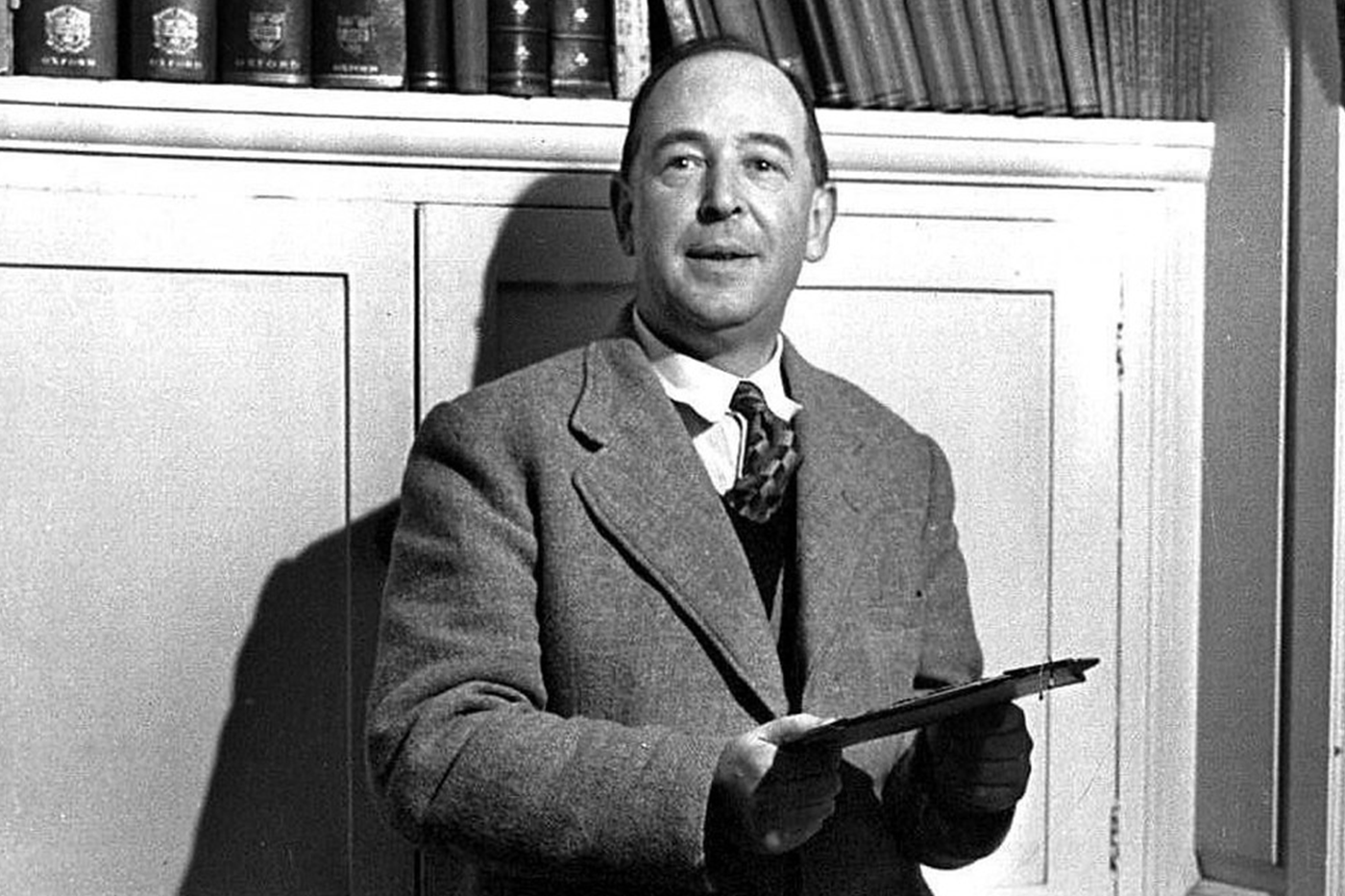
Let’s time travel and talk to C.S Lewis about human nature. I’ll be quoting from Mere Christianity and The Screwtape Letters.
Vance: Mr. Lewis, tell me about Christian morality.
C.S Lewis: “People often think of Christian morality as a kind of bargain in which God says, ‘If you keep a lot of rules, I’ll reward you, and if you don’t, I’ll do the other thing.’ I do not think that is the best way of looking at it. I would much rather say that every time you make a choice, you are turning a central part of you, the part of you that chooses, into something a little different from what it was before.
And taking your life as a whole, with all your innumerable choices, all your life, you are slowly turning this central thing either into a heavenly creature or into a hellish creature.”
V: Any hope for us?
C.S: “Each has done something to himself which, unless he repents, will make it harder for him to keep out of the rage the next time he is tempted and will make the rage worse when he does fall into it. Each of them, if he seriously turns to God, can have that twist in the central man straightened out again: each is, in the long run, doomed if he will not.
When a man is getting better, he understands more and more clearly the evil still left in him. When a man is getting worse, he understands his own badness less and less.”
Good and evil both increase at compound interest. That is why the little decisions you and I make every day are of such infinite importance. The smallest good act today is to capture a strategic point from which, a few months later, you may be able to go on to victories you never dreamed of. An apparently trivial indulgence in lust or anger today is the loss of a ridge or railway line or bridgehead from which the enemy may launch an attack otherwise impossible.”
V: Even the little decisions?
C.S: “Indeed, the safest road to Hell is the gradual one-the gentle slope, soft underfoot, without sudden turnings, without milestones, without signposts.”
Even the slightest compromise opens you up to negotiations—a boundary that is unenforced, and as such, not a boundary.
It is fitting, I would say, to pray this dangerous prayer that King David did:
“Search me, God, and know my heart; test me and know my anxious thoughts.
See if there is any offensive way in me, and lead me in the way everlasting.”
I look at my social media feeds and watch the hate and disinformation fly. I’ve heard someone say they follow Q of QaNon. That person claims to follow Jesus.
You either follow Jesus exclusively or not at all.
This gets to my next point in this overly-politicized time. Christians are making America an idol. It’s called Christian Nationalism.
The Church—born-again believers worldwide—are a separate nation called the Kingdom of God. We’re to be salt and light instead of just salty.
Our mission is to get more people into that nation.
As I said in an earlier post, we’re not of this world. We’re just in it, passing through.
“My prayer is not that you take them out of the world but that you protect them from the evil one. They are not of the world, even as I am not of it. Sanctify them by the truth; your word is truth.” John 17:15-17
Jesus in the Sermon of the Mount gives what some call the Constitution of the Church. Notice the keywords in Matthew 5:1-2:
“Now when Jesus saw the crowds, he went up on a mountainside and sat down. His disciples came to him, and he began to teach them.”
Not the public, his followers. The Sermon on the Mount is for Christians.
You may say that everyone is just messing up, or it would be better to follow Jesus.
Amen to that. However, I don’t expect anyone who doesn’t follow Jesus to act like a Christian. I expect Christians to act like Christians.
Here’s a quote from a book I’m reviewing on Friday.
“Dallas Willard was once asked why Christians are so mean. He responded by saying that Christians tend to be mean to the degree that they value being right over being like Christ. The two aren’t mutually exclusive, of course, but we can make them that way when instead of receiving the words of Jesus and the writings of Paul as love letters from God to those who are chosen and loved, we use them as verbal weapons to wage war against people who don’t yet believe. I don’t want you to rush by that last sentence.
God’s directives and “rules” in the New Testament aren’t intended to be verbal grenades that we lob at people who don’t believe. When someone doesn’t accept Jesus’ authority, we can’t expect them to listen to what the Bible teaches. When God has won over our hearts, we understand that his revealed words regarding appropriate behavior are birthed in love and ultimately given for our best interests. We won’t love God’s words until we first love God, so keep first things first. Taunting people even with the truth can become toxic in a controlling sort of way. It’s still taunting. Methods matter.”
Don’t antagonize people purposely. It’s like Ellen Page changing their name to Elliot Page. That raised a stink.
It doesn’t matter; call them by whatever they want to be called. The goal is to win people, not make a point.
In the Corinthian Church, they had a guy having sex with his stepmom. They were okay with it. But they were condemning people outside the church for sin. Paul wasn’t happy.
Why? Because while Christians are a work in progress, we still have a standard to reach. We won’t reach it until we die, but every decision is a step toward it or away.
This guy was unrepentant, so Paul said kick him out.
The guy repented. The Corinthians asked what to do now. In 2nd Corinthians 2, Paul said welcome him back and comfort him. Reconciliation is always the goal.
Paul said this about the Church compared to the world:
“What business is it of mine to judge those outside the church? Are you not to judge those inside? God will judge those outside. “Expel the wicked person from among you.” 1 Corinthians 5:12-13
Worry less about the state of affairs in America and more about the state of affairs in the Church. Do we look like Jesus or the culture?
Because if we look like the culture, why would they bother to come to Jesus as we represent Him since they have what they want now?
My brother asked a question about a bumper sticker slogan he saw. It said faith didn’t require facts. I usually don’t answer theological questions on Facebook, but I answered because of who he is.
Another friend commented that he spent his childhood praying for God to stop his abusive father. He was praying for peace.
The heavens were silent.
He asked if there is a God, and He has the power to answer prayers, why is there so much pain and suffering. How can evil exist?
“Why didn’t God answer my prayer to make the bad stop?”
I saved the thread so I could reflect on it. I could give the intellectual answers, yet the heart would be unreached.
We can choose to love or hate and twist the concepts to rationalize our actions.
We are all fallen and imperfect. I recognize the evil left in my heart, and it shocks and terrifies me.
Even acknowledging evil indicates recognizing a moral lawgiver and a standard. Without that, it’s only a matter of opinion, and the issue is just to change your opinion.
God’s answer to the question of evil is Jesus. He didn’t stay in Heaven apart from it all. God came to Earth, and not as a king or a superhero.
He came as a baby.
Jesus experienced the good and the bad of life. He doesn’t just sympathize; he can empathize.
People tried to kill him. Jesus grieved loved ones who died. He was betrayed and abandoned.
Jesus even had an unanswered prayer.
In the Garden of Gethsemane, he asked God if there was a way to avoid the cross. Jesus, fully human and fully God, feared death, pain, and the wrath of God he faced the next day.
Jesus still chose to go to the cross.
There, he reconciled God and man through himself.
It will take time because there is a time when all will be judged. Either by what evil people had done or the good.
If every evil act got a lightning bolt, there would be no one left. There would be no second chance, no mercy, and no chance at reconciliation.
I would be dead and in Hell. So would you.
Yet God is giving us every chance to stop and turn back to Him.
Why didn’t God answer your prayer?
We asked for a baby for years. People prayed over my wife on a night specifically for that at church. Women struggling with infertility got pregnant.
Casey got pregnant with Squiggles. An answered prayer.
The first ultrasound revealed a dangerously slow heartbeat. I fasted and prayed that the baby would live.
Squiggles didn’t.
Why didn’t God answer my prayer?
The answer is…I don’t know.
I do know we were never promised an easy life. Jesus said this right before he went to the cross:
“I have told you these things, so that in me you may have peace. In this world you will have trouble. But take heart! I have overcome the world.” John 16:33 NIV