Translate

Monday, October 4, 2021

“Personal Epistemology” or How Do You Know What You Know Part 2

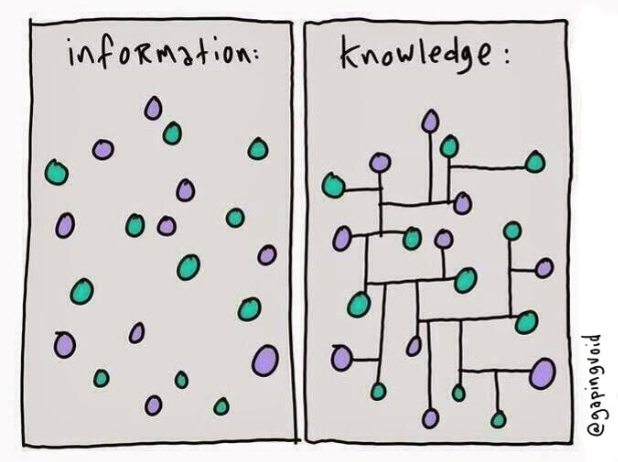
 Last Monday we looked at the very dry area of how we can know what we know (epistemology). Why? The internet, social media, and media in general, are good at giving you memes and sound bites. No real knowledge, just information floating disconnected in your mind. And then more, and more, an information buffet. This is going to be one of the deepest posts I’ve written, important for developing a thoughtful Christianity.


Let’s dive deeper and ask ourselves the hard questions.

Five Areas of Worldview

Now you’re better prepared to examine the five areas of worldview: theological (God), axiological (ethics), anthropological (human nature), metaphysics (ultimate reality), and epistemology (knowledge). We’ve spent a lot of time working on that one.
Many never thought out their worldview, so let’s explore. Answer the questions for yourself.
How about theology, questions about deity.
  • Does God exist, and if God exists, what would this Being be like?
  • Can it be known?
  • Has it spoken?
That’s the transcendent/supernatural, next we’ll look at physical reality.
These are the metaphysical questions, like:
  • Does the universe have a beginning?
  • Is the natural, material world all there is?
  • Are miracles or the supernatural possible?
While we’re asking questions, let’s question our knowledge of knowledge, epistemology.
  • What is knowledge?
  • Can we know anything at all?
  • Does objective truth exist?
  • Can we trust our senses?
  • What are the proper roles of faith, reason, and the experience of the senses in knowledge?
  • Can we have knowledge of God?
Anthropological questions, questions of humanity, have you thought about them?
  • What does it mean to be human?
  • Where did humans come from?
  • Do we possess dignity and value?
  • What is our purpose and destiny in life?
  • Do humans possess free will?
  • Is there life after death?
Knowledge. Truth. God. Humanity. Life after death. This leads to exploring the ethical questions. A word of warning, how you answer these questions has to be systematically coherent. With that in mind…
  • Are there objective moral values and duties that govern human conduct?
  • What are they?
  • Is morality simply relative to individuals, cultures, or historical periods?
  • What is the good life?
  • Who is really well off?
  • How do I become a good person?
  • What is beautiful?
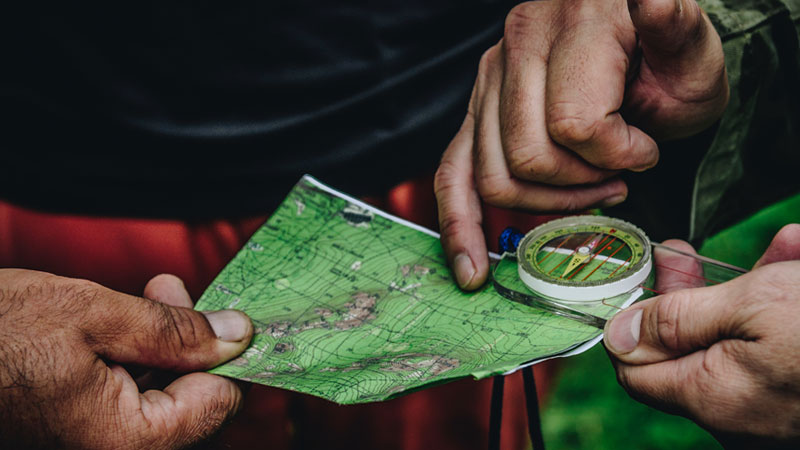
Most people have never thought through these questions. Instead, they have a take on the world, just a feeling of the map of reality.

Our Take On Reality

Rory Miller uses what he calls BVME to explain it. That stands for Beliefs, Values, Morals, Ethics. Due to the model, he uses different definitions for morals and ethics.
These drive what people say, do, or are. 
  • The lowest level is Beliefs, the things that you hold to be true. Often, they are subjective rather than objective. They’re our internal assumptions about the world-what philosopher Charles Taylor calls our social imaginary and it lays the foundation for everything we do or say.
  • The next level up is Values. These are the more important things that we believe. Belief and values are deeply planted and mostly seen only in someone’s actions.
  • Morals come from Values and are your gut feeling of right and wrong. A note: not morals in a philosophical sense, just for this model.
  • Ethics are your personal code. They’re the general rules you make up to put your morals into words.
Why does it matter? The deeper into the BVME level, the harder it is to persuade. At the top level of ethics, you can have friendly disagreements. It’s the least personal and most conscious level where arguments aren’t seen as an attack on identity.

An argument at the lowest level – beliefs, is seen and felt as an attack on identity. Telling someone that one of their beliefs is wrong is perceived as telling them they’re stupid and will be seen as an attack. If anyone disagrees with you from the belief level, it’s impossible to convince them from a higher level.

Everything is about identity these days.

The key is in being able to explain yourself from a deeper level. That makes it easier for them to see things from your point of view. To find the depth of their beliefs the following questions shine: ‘What do you mean by…,’ and ‘how did you come to that conclusion?’

Ethics are easiest to alter. Rory used this as an example: ‘thou shall not kill’ is an ethic, based on the moral that killing is wrong, on the value that life is important, and the belief that life and death exist.

Morally it can be argued that there are different types of killing with different types of moral weights. At the value level, a number of people accept that there are some things more important than an individual human life.

When applying BVME to others, remember that it’s harder to make a change at the belief level. You can dig down to that level with questions, and then use leading questions to point out contradictions or attack the epistemology-how a person or society decides what’s true.

It can also be applied personally to change your capacity. The deeper you challenge your resistance, the more successful you will be. If you can track your hesitations down to the value level, you can establish clarity by working through things in advance.

What’s the point of all this?

To develop a thoughtful life. Though moderation is key, don’t just live to gain knowledge, or get so wrapped up in it that you don’t use it for others.

First, now that the foundation is in place, how can you start to lead a thoughtful life? It’s not by jumping into a sea of information, you have to follow a stream of information to it. Look at it broadly and deeply, from different angles and disciplines.

Ask the who, what, where, why, and how questions.

Don’t continually read (blasphemy!?), also reflect on the information you have. Read only what pertains to the purpose you’re pursuing, reading little so the quietness of your reflection isn’t interrupted.

The question I’ve asked myself is should I think broadly on a lot, or deeply on a little. I would answer, both. Think deeply on your chosen subject, and reach broadly in all the areas it touches.

Remember to rest, be able to defend a thesis and still play with a kid. Don’t let your study narrow you, but make you whole. The goal is to study to help others, not to study purely for the sake of study.

This is how I think deeply. What about your personal epistemology?

Monday, September 27, 2021

“Personal Epistemology” or How Do You Know What You Know Part 1


The internet, social media, and media in general, are good at giving you memes and sound bites. No real knowledge, just information floating disconnected in your mind. And then more, and more, an information buffet. This is going to be one of the deepest posts I've written, important for developing a thoughtful Christianity.

 
I’m about to teach you about an expensive word. It’s epistemology, a branch of philosophy that investigates the origin, nature, methods, and limits of human knowledge. We all have it, even though we don’t realize it, and it’s not always right. The question is, how can we set up a system of reasoning that’s correct?
I’ll take a stab at it.


First Principles

Reality hinges and sits on irreducible first principles that are the foundation of everything.
  • The principle of existence—the first being that something exists and that something is real.
Next answers the how are we here.
  • The principle of causality—no thing cannot produce something.
Not only that, something cannot give what it doesn’t have to something it causes it, like life to nonlife. That’s the principle of analogy in action.
 
  • The principle of identity—something has attributes that make it identical to itself, a change would make it something else. It's one of the three laws of logic.
  • The principle of the excluded middle—since something has to be one thing or another, then it can’t be something in the middle. This is the second law/principle of reality comes in.

Trying to mix something hits the third law of logic and another first principle.

  • The principle of non-contradiction—it’s the fundamental law of reality that something cannot simultaneously be one thing, and another at the same time and in the same sense.

Confused? For example, I cannot be married to Casey, and a bachelor at the same time. A married bachelor is illogical. Before we were married I was a bachelor, now I’m married. It’s the either/or, and it’s an excellent tool to find if a claim is true or not. Just apply the claim to itself like above. Is this simultaneously true and not true at the same time?

Putting Information To The Test

That sets the framework of belief into place. To find out if a truth claim is objective, check to see if it can be affirmed or denied in line with the first principles. How to do it takes questioning.
Ask:
  1. Does it exist?
  2. What is its definition, its identity?
  3. Does it contradict itself?
  4. Is it this, or not this? There cannot be a middle ground.
  5. Where did it come from?
  6. Is it similar to what caused it?
Every question is based on the First Principles of Reality. Undeniability is the acid test the questions use to find truth among diverse truth claims.
 
Then you can check systems of thought with First Principles. You can check to see if it contradicts itself, obviously or in the process to form it turned out to be contradictory to its claims. Like reasonable impulsiveness.
 
If something is going to be there, then it will be a certain way rather than another, keeping with the law of identity. If it’s undeniably true, then anything that contradicts it is false according to the law of noncontradiction.
 
The small ideas with a system have to be consistent with the big ones.

Types of Reasoning

I know of three, the simplest being abductive reasoning. Its the same type used by detectives and archaeologists. It goes from an event and works it’s way back.
 
Say X happened, so you look at the evidence of the event, and work out the most reasonable explanation of it. The more evidence, circumstantial/indirect, and direct evidence from trustworthy witnesses, the stronger the conclusion.
How do you test the witnesses?
  1. Make sure they were actually there and in a position to see anything.
  2. See if you can find some corroboration for the witness's claims so you can verify it.
  3. Examine the consistency and accuracy of the witnesses. If it’s changed over time then their testimony is in question. That’s why the evidential chain of custody is important to see who had it and when it changed.
  4. Check for bias on the part of witnesses. A key thing to remember is the difference between bias prior to the experience and conviction following the experience.
Bias comes down to motive, and motive comes down to three driving desires:
  • Financial greed
  • Sexual/relational lust
  • Pursuit of power
If these motivations are absent then it should be accepted as unbiased.
 
The next two systems of reasoning tie together, inductive and deductive. As I understand it, it’s like the scientific method, a hypothesis, and the experiment to test it.
  • Inductive reasoning looks at a bunch of effects and conditions, then generalizes it, producing a theory or explanation that can be tested with deductive reasoning.
  • Deductive reasoning takes the theory/statement, makes an observation, and predicts the conclusion. Used in a logical syllogism it's: major premise->observation or minor premise->does the conclusion naturally run to this result.
As for the premises and evidence, you have to watch for your own subconscious ‘software glitches’-your cognitive biases that interfere with your processing.
 

Software Glitches

There are four that I think I have worked up a defense against are the Halo effect, availability heuristic, the anchoring bias, and the misinformation effect.
  1. The Halo effect’s perception that pretty people are better. Simply be aware of your tendency to give deference to them.
  2. The availability heuristic, where we have just a small part of a sea of information. All that information, and you’ll see just a small part of it, and understand even less of it. The use of the First Principle questions is key here. So too are looking for patterns and underlying threads that will largely remain the same despite individuals’ perceptions. Then use reasoning.
  3. The anchoring bias, where you let the first piece of information influence you. Distill it to data, file it, and build a case like a detective without allowing confirmation bias (accepting information that only confirms your presuppositions) or information bias (to seek more information where it’s not reasonably needed) to influence.
  4. To make sure you’re not getting misinformation (the misinformation effect), remove adjectives and extreme verbs from a statement so it doesn’t trigger emotions as much, making for a more clinical read. Especially with the emotionally charged 24/7 news cycle.
 
Work through these and we'll finish up Next Monday when we apply these to our worldview.

Monday, September 20, 2021

Talking Past Each Other

 At the time of this writing, my social media is blowing up, and that tells you nothing. Social media is constantly blowing up with the latest issue. If you post something unrelated, someone will try to twist it to their pet issue. 

I read Proverbs at least once a year, and it’s like Solomon had the internet in mind. 

“The wise don’t make a show of their knowledge, but fools broadcast their foolishness.”

PROVERBS 12:23

Does this post count? Oh boy. 

“Do not speak to fools, for they will scorn your prudent words.” Proverbs 23:9

“Those who guard their lips preserve their lives, but those who speak rashly will come to ruin.” Proverbs 13:3

Or get you canceled. 

Where am I going with all this? 

Right now, in this relativistic society, reality is denied, and people are forcing their own meanings into words. So you can say the exact words but are speaking in a different language. 

People are coming from different worldviews, their map of reality. They may as well be from another country with the culture shock. 

Unpopular opinion, don’t cancel me, but Americans have gotten so individualistic and hard-headed that once we get set in our ways, we reject all reason. 

We’re very good at rationalizing, though. The Right and the Left. 

Another issue with the disunity of discourse is it is very easy to other people. Those people, not like us, are different, therefore less than. It’s rampant. 

Jesus said, “Sin will be rampant everywhere, and the love of many will grow cold.” 

I’m not seeing much love, and honestly, I’m not feeling like giving much love. I want to turn loose online with both guns blazing like I used to. 

I don’t think it changed a single person’s mind. It only attracted like-minded individuals. Hence, creating the bandwagon effect, confirmation bias, and feeding presuppositions. 

Seriously, check out cognitive biases and honestly look at how many you’re affected by. 

I can see why the Essenes left society in ancient Judaism. 

Running into the arena slinging opinion and vitriol is easy and useless. Ain’t nobody got time for that. So stay skeptical, but not cynical, with a healthy dose of reasonableness.


Monday, September 13, 2021

Foundations Matter

 We recently bought a four-bedroom, two-bathroom house that on the website looked great. In real life, it still looked good, with a few minor issues. The home inspector didn’t see anything that set off any alarms. 

After we moved in, I started noticing things. Superficial cracks and some not so shallow. Floors had a more notable sag that I couldn’t attribute to the type of foundation. 

I texted my friends in a group text, “Jesus was right, who knew?”

In the Sermon on the Mount, at the end of chapter 7, Jesus said, “Anyone who listens to my teaching and follows it is wise, like a person who builds a house on solid rock. Though the rain comes in torrents and the floodwaters rise and the winds beat against that house, it won’t collapse because it is built on bedrock. But anyone who hears my teaching and doesn’t obey it is foolish, like a person who builds a house on sand. When the rains and floods come and the winds beat against that house, it will collapse with a mighty crash.”

I had a structural engineer come out to the house, and a big problem with my foundation is the type of clay it sits on. It expands and contracts more than most. 

Like my house, what we build our lives on determines our stability. So it’s crucial in our volatile world that’s increasingly unstable. 

What is your “house” built on?

Monday, August 30, 2021

Choked and Burned Out

 During this time of stress and anxiety with the move and financial situation, I thought of a couple of things. The Parable of the Sower and Jesus’ Yoke and how it applies to me. 

First, the Parable and its explanation. 

“Listen! A farmer went out to plant some seed. As he scattered it across his field, some of the seed fell on a footpath, and the birds came and ate it. Other seed fell on shallow soil with underlying rock. The seed sprouted quickly because the soil was shallow. But the plant soon wilted under the hot sun, and since it didn’t have deep roots, it died. Other seed fell among thorns that grew up and choked out the tender plants, so they produced no grain. Still, other seeds fell on fertile soil, and they sprouted, grew, and produced a crop that was thirty, sixty, and even a hundred times as much as had been planted!” Then he said, “Anyone with ears to hear should listen and understand.” Mark 4:3-9

“The farmer plants seed by taking God’s word to others. The seed that fell on the footpath represents those who hear the message, only to have Satan come at once and take it away. The seed on the rocky soil represents those who hear the message and immediately receive it with joy. But since they don’t have deep roots, they don’t last long. They fall away as soon as they have problems or are persecuted for believing God’s word. The seed that fell among the thorns represents others who hear God’s word, but all too quickly the message is crowded out by the worries of this life, the lure of wealth, and the desire for other things, so no fruit is produced. And the seed that fell on good soil represents those who hear and accept God’s word and produce a harvest of thirty, sixty, or even a hundred times as much as had been planted!” Mark 4:14-20

It’s an evangelistic passage. However, I can see it as a passage teaching about growth. At the start, seven years ago, I was on my way to being very fruitful. 

With the kids and then the move and finances, the worries of life were choking me. I was tired, all my bandwidth going in so many directions, always at the tipping point. 

“My Father has entrusted everything to me. No one truly knows the Son except the Father, and no one truly knows the Father except the Son and those to whom the Son chooses to reveal him.”

Then Jesus said, “Come to me, all of you who are weary and carry heavy burdens, and I will give you rest. Take my yoke upon you. Let me teach you, because I am humble and gentle at heart, and you will find rest for your souls.” Matthew 11:27-29

This time period is teaching me to trust and leave it to Jesus. I do my part but leave the outcome to him. 

I’ve seen Jesus work in mine and others’ lives, but I tend to forget. I’m sure I’m not the only one. 

There’s a hashtag I see my friends use, #wonthedoit. He did. I just have to remember, this is so I can grow too. 

“Dear brothers and sisters, when troubles of any kind come your way, consider it an opportunity for great joy. For you know that when your faith is tested, your endurance has a chance to grow. So let it grow, for when your endurance is fully developed, you will be perfect and complete, needing nothing.” James 1:2-4

Monday, August 16, 2021

The Rest Of The Story

 We left off with the house we were renting going onto the market. We had to find a new home, and I was shooting for a promotion that I was a shoo-in for. 

Things didn’t turn out as planned…and in weaker moments, I wished the prosperity gospel was true. Just plant a seed and become the next millionaire. 

God’s not a genie, though.

We hit the market hard, looking for something close to what we pay in rent. Three bedrooms and at least a 1.5 bathroom house. Two bathrooms ideally and an open floor plan, so my Deaf wife has good sightlines. 

HGTV was always on in the background as the soundtrack.

We found a cozy house nearby with an incredible backyard. Huge. We made our first offer…competing against another offer. 

I got a taste of how many times I’d have to sign my name. 

The seller took the other offer. 

Saddened, we continued. Our realtor, Felicia, made friends with my son. He was going through separation anxiety, but he loved her. 

We looked at houses together or through FaceTime while I was at work. 

Felicia knew of a home in a nice neighborhood about to go on sale. I used to run through that area. 

The house was a lovely tri-level in a super safe area. We looked at the numbers with our loan officer.

It was out of our range, especially if Casey was going to be a stay-at-home mom.

There was another house–renters has just moved out so it wasn’t cleaned–that we looked at the same day.

As I drove through the neighborhood, my Spidey-sense was tingling. Felicia was waiting and shaking her head. 

She told us to keep the car running and she’d hang out with my sleeping kid. So Casey and I hit the front door and ran into a wall of residual marijuana smoke. Did the house tour in under a minute with a contact high. 

I told her they lost their security deposit. 

At one time, I had it narrowed down to three houses. But, let me tell you, things look much better and bigger on real estate sites. 

Analytical Type Five that I am, I did recon on two of them. In one neighborhood, I didn’t even want to stop at a stop sign.

A mile away, I breathed easier at the second place. We arranged a viewing, and it was cozy. I liked it, but it was small. 

Another house, close to a friend’s home, was nice and open. Close to the size of ours, though. What I didn’t like was the parking. Single lane, on a hill.

My wife loved it, though. 

We looked in North Little Rock, Benton, Bryant, Sherwood, Cabot, Jacksonville, and the surrounding areas. At that time, our house was sold to an investor. Felicia did it on purpose so we could stay if need be. 

The investor was okay with it. I said we’ll hit it hard for July, and then if nothing still, we’ll stay. I didn’t have high hopes because everything was going under contract so fast. 

Then my wife got a feeling one day while I was at work. Look east at a town that’s 16 miles away. 

Throughout the process, I told her if she looks at a place and likes it and I’m not there, make an offer. 

She met Felicia at the house she found. Four bedrooms, two baths, open floor plan on 1300 square feet with a detached garage.

Of course, she made an offer. It checked all the boxes. There were other offers as well.

The next day, Felicia and I looked at a house near my home. She said that she checked that morning, and it was under contract. She hadn’t heard from the other realtor. 

I looked at the house we were at and didn’t bother calling Casey. It was that bad. Then we went to another nearby.

I had Casey on FaceTime. Felicia has Sam. I’m showing her the house, and Casey wasn’t impressed at all. Felicia looked at her phone.

“It was your offer they accepted…” she says quietly.

“What?” 

She looks up, smiling. “They accepted your offer!” she yells. 

I yell. I tell Casey, and she screams. 

Sam, who doesn’t know what is happening, starts crying. 

Nurses that work with Casey run over to check on her, thinking the baby is coming. 

I tell Felicia we will not be making an offer on this house we’re in now.

Immediately, I go see what I’m getting into. I’ve only seen that house online and on FaceTime. 

It’s beautiful yet needs work. I met a neighbor who takes care of the church across the street. He preached the Gospel to me.

That’s a good sign. We began the process of buying the home. I did so much research on it and the area, with spreadsheets galore. 

Then I found out I didn’t get the promotion. Daycare would cost $1400 a month, and I’m not sure how I can make ends meet. So I planned and stressed, losing sleep to the anxiety. 

But, we start moving in today. We got our forever home, and in a matter of days, we’ll bring our baby girl home to it. 

It’s interesting watching God move with the benefit of hindsight. I just wished He would let me in on it, so I didn’t get more white hair. 

Friday, August 6, 2021

Uncommon Ground: Living Faithfully in a World of Difference: A Book Review

 I’ve had this post scheduled on the calendar to write for a while. Finding the time to write it has been challenging. But, it’s a necessary post in this divided time. 

This book was recommended by one of the nerdiest pastors I know (love you, Pastor Randy). It’s edited by one of my favorite authors, Pastor Tim Keller. I had to read it. That book is…

Uncommon Ground: Living Faithfully in a World of Difference

“Bestselling author Timothy Keller and legal scholar John Inazu bring together a thrilling range of artists, thinkers, and leaders to provide a guide to faithful living in a pluralistic, fractured world.

How can Christians today interact with those around them in a way that shows respect to those whose beliefs are radically different but that also remain faithful to the gospel? Timothy Keller and John Inazu bring together illuminating stories—their own and from others—to answer this vital question. Uncommon Ground gathers an array of perspectives from people thinking deeply and working daily to live with humility, patience, and tolerance in our time.

Contributors include:

Lecrae

Tish Harrison Warren

Kristen Deede Johnson

Claude Richard Alexander

Shirley Hoogstra

Sara Groves

Rudy Carrasco

Trillia Newbell

Tom Lin

Warren Kinghorn

Providing varied and enlightening approaches to reaching faithfully across deep and often painful differences, Uncommon Ground shows us how to live with confidence, joy, and hope in a complex and fragmented age.”

I read the reviews, and they blasted the book for attacking white people. So, naturally, I read it anyway to see for myself, and I didn’t see the attack. What I found is pointing out some things that could be taken personally. It’s easy to be offended today. 

Commas offend me.

I digress on to the quotes.

“Americans, like citizens of most Western nations today, lack agreement about the purpose of our country, the nature of the common good, and the meaning of human flourishing. These differences affect not only what we think but also how we think and see the world. This is the fact of pluralism today: deep and irresolvable differences over the things that matter most.”

“Understanding pluralism means understanding our past. The fact of pluralism is one reason the United States is not, and has never been, a thoroughly “Christian nation.” To be sure, a white Protestant culture, or what in some circles is called Judeo-Christian culture, influenced this country’s founders and shaped middle-class norms and values for much of its history. That shared culture—and its assumed consensus about public morality and the nature of religious practice—brought with it important social benefits, among them the building and sustaining of institutions and infrastructure. The vast majority of today’s charitable sector—private colleges and universities, hospitals, and social service organizations—has its roots in Protestant (and later Catholic and Jewish) communities.”

“But this shared Protestant culture failed to recognize, and sometimes perpetuated, significant injustices. Protestants were often indifferent and sometimes hostile toward the religious freedom claims of religious minorities. White Protestants were largely absent from the civil rights movement, and some white Protestants engaged in personal and structural racism that exists to this day. The social and legal power of the Protestant culture often stifled differing views about race, religion, gender, and sexuality. Within this dominant Protestant culture, many Christians forgot the biblical counsel that on earth we have no lasting city (Heb. 13:14) and are not to place our trust in earthly princes (Ps. 146:3).”

“Recently the assumed consensus of the Protestant culture has weakened, in part from a growing awareness of differences in religious (and increasingly, nonreligious) beliefs. At the same time, deep and accelerating social trends toward individualism and autonomy have eroded trust in social institutions: business, media, government, church, and even the family. Yet as Protestant culture has declined, no successor has appeared. Neither evangelicalism nor Roman Catholicism nor secularism has replaced the previous assumed consensus. This is the background against which we asked our questions about finding common ground, even when we don’t agree on the common good. We also wanted to explore how Christians might embody humility, patience, and tolerance, the civic practices that John identifies in his book Confident Pluralism. We believe these embodied practices are fully consonant with a gospel witness in a deeply divided age. In fact, they not only make space for the gospel but also point, respectively, to the three Christian virtues of faith, hope, and love.”

“The first of these practices, humility, recognizes that in a world of deep differences about fundamental issues, Christians and non-Christians alike are not always able to prove why they are right and others are wrong. Christians are able to exercise humility in public life because we recognize the limits of human reason, including our own, and because we know we have been saved by faith, not by our moral actions and goodness. That confident faith anchors our relationship with God, but it does not supply unwavering certainty in all matters.”

“Patience encourages listening, understanding, and questioning. Patience with others may not always bridge ideological distance; we are unlikely to find agreement on all the difficult issues that divide us. But careful listening, sympathetic understanding, and thoughtful questioning can help us draw closer to others as we come to recognize the shared experiences that unite us and the different experiences that divide us. Christians can be patient with others because we place our hope in a story whose end is already known. Tolerance is a practical enduring of beliefs and practices that we do not share. It does not mean accepting those beliefs or approving those practices. In fact, the demand for acceptance is a philosophical impossibility. Every one of us holds views about important matters that others find clearly misguided. There is no way that anyone can embrace all the differing and mutually incompatible beliefs. But we can do the hard work of distinguishing people from ideas, of pursuing relationships with people created in God’s image, while recognizing that we will not approve of all their beliefs or actions. Christians can demonstrate tolerance for others because our love of neighbor flows from our love of God, and our love of God is grounded in the truth of the gospel.”

“The Christian calling is to be shaped and reshaped into people whose every thought and action is characterized by faith, hope, and love—and who then speak and act in the world with humility, patience, and tolerance. In fact, when we are motivated by the love of Christ, we can do far more than simply tolerate. Think about your relationships with friends who hold beliefs different from yours. You don’t just tolerate them. You laugh, cry, celebrate, and mourn with them. You risk a kind of personal vulnerability that requires more than just coexisting together in the same space. And what about those who overtly reject you or are even hostile to you? The answer is the same. Jesus doesn’t tell us to tolerate our enemies. He says to love them. And thank God that Jesus does not merely tolerate us—he embraces us across differences and welcomes us into his arms.”

All that was only 8% of the way into the book. That sets up the framework the contributors will address. 

“Part I explores the roles through which we think about our engagement with others. Kristen Deede Johnson reflects on the contribution of the theologian, and Tim Keller considers the role of the pastor. Tom Lin and Rudy Carrasco offer two different postures that Christians can assume: the adventurer and the entrepreneur.”

As an aside, Kristen Deede Johnson was very politically minded and involved in Washington, so I especially enjoyed her perspective in light of today’s political climate. 

“Part II looks at how we speak when we engage our neighbors in an increasingly pluralistic society. Tish Harrison Warren begins by reflecting on the role of the writer, which connects us to other people and shapes the world in which we live.”

“Finally, Part III turns to how we embody our engagement with others. Shirley Hoogstra and Warren Kinghorn reflect on bridge building and caregiving. Trillia Newbell and Claude Alexander Jr. conclude the book by considering our roles as reconcilers and peacemakers.”

I could go on with my favorite quotes, but there are about seventy highlights left. For the sake of space, I won’t. I will say, get the book, read it. Take in different perspectives from different Christians. 

You don’t have to agree, but we can’t move forward if we don’t talk to each other. 

5 stars.