Translate

Friday, August 6, 2021

Uncommon Ground: Living Faithfully in a World of Difference: A Book Review

 I’ve had this post scheduled on the calendar to write for a while. Finding the time to write it has been challenging. But, it’s a necessary post in this divided time. 

This book was recommended by one of the nerdiest pastors I know (love you, Pastor Randy). It’s edited by one of my favorite authors, Pastor Tim Keller. I had to read it. That book is…

Uncommon Ground: Living Faithfully in a World of Difference

Bestselling author Timothy Keller and legal scholar John Inazu bring together a thrilling range of artists, thinkers, and leaders to provide a guide to faithful living in a pluralistic, fractured world.

How can Christians today interact with those around them in a way that shows respect to those whose beliefs are radically different but that also remain faithful to the gospel? Timothy Keller and John Inazu bring together illuminating stories—their own and from others—to answer this vital question. Uncommon Ground gathers an array of perspectives from people thinking deeply and working daily to live with humility, patience, and tolerance in our time.

Contributors include:

Lecrae

Tish Harrison Warren

Kristen Deede Johnson

Claude Richard Alexander

Shirley Hoogstra

Sara Groves

Rudy Carrasco

Trillia Newbell

Tom Lin

Warren Kinghorn

Providing varied and enlightening approaches to reaching faithfully across deep and often painful differences, Uncommon Ground shows us how to live with confidence, joy, and hope in a complex and fragmented age.”

I read the reviews, and they blasted the book for attacking white people. So, naturally, I read it anyway to see for myself, and I didn’t see the attack. What I found is pointing out some things that could be taken personally. It’s easy to be offended today. 

Commas offend me.

I digress on to the quotes.

“Americans, like citizens of most Western nations today, lack agreement about the purpose of our country, the nature of the common good, and the meaning of human flourishing. These differences affect not only what we think but also how we think and see the world. This is the fact of pluralism today: deep and irresolvable differences over the things that matter most.”

“Understanding pluralism means understanding our past. The fact of pluralism is one reason the United States is not, and has never been, a thoroughly “Christian nation.” To be sure, a white Protestant culture, or what in some circles is called Judeo-Christian culture, influenced this country’s founders and shaped middle-class norms and values for much of its history. That shared culture—and its assumed consensus about public morality and the nature of religious practice—brought with it important social benefits, among them the building and sustaining of institutions and infrastructure. The vast majority of today’s charitable sector—private colleges and universities, hospitals, and social service organizations—has its roots in Protestant (and later Catholic and Jewish) communities.”

“But this shared Protestant culture failed to recognize, and sometimes perpetuated, significant injustices. Protestants were often indifferent and sometimes hostile toward the religious freedom claims of religious minorities. White Protestants were largely absent from the civil rights movement, and some white Protestants engaged in personal and structural racism that exists to this day. The social and legal power of the Protestant culture often stifled differing views about race, religion, gender, and sexuality. Within this dominant Protestant culture, many Christians forgot the biblical counsel that on earth we have no lasting city (Heb. 13:14) and are not to place our trust in earthly princes (Ps. 146:3).”

“Recently the assumed consensus of the Protestant culture has weakened, in part from a growing awareness of differences in religious (and increasingly, nonreligious) beliefs. At the same time, deep and accelerating social trends toward individualism and autonomy have eroded trust in social institutions: business, media, government, church, and even the family. Yet as Protestant culture has declined, no successor has appeared. Neither evangelicalism nor Roman Catholicism nor secularism has replaced the previous assumed consensus. This is the background against which we asked our questions about finding common ground, even when we don’t agree on the common good. We also wanted to explore how Christians might embody humility, patience, and tolerance, the civic practices that John identifies in his book Confident Pluralism. We believe these embodied practices are fully consonant with a gospel witness in a deeply divided age. In fact, they not only make space for the gospel but also point, respectively, to the three Christian virtues of faith, hope, and love.”

“The first of these practices, humility, recognizes that in a world of deep differences about fundamental issues, Christians and non-Christians alike are not always able to prove why they are right and others are wrong. Christians are able to exercise humility in public life because we recognize the limits of human reason, including our own, and because we know we have been saved by faith, not by our moral actions and goodness. That confident faith anchors our relationship with God, but it does not supply unwavering certainty in all matters.”

“Patience encourages listening, understanding, and questioning. Patience with others may not always bridge ideological distance; we are unlikely to find agreement on all the difficult issues that divide us. But careful listening, sympathetic understanding, and thoughtful questioning can help us draw closer to others as we come to recognize the shared experiences that unite us and the different experiences that divide us. Christians can be patient with others because we place our hope in a story whose end is already known. Tolerance is a practical enduring of beliefs and practices that we do not share. It does not mean accepting those beliefs or approving those practices. In fact, the demand for acceptance is a philosophical impossibility. Every one of us holds views about important matters that others find clearly misguided. There is no way that anyone can embrace all the differing and mutually incompatible beliefs. But we can do the hard work of distinguishing people from ideas, of pursuing relationships with people created in God’s image, while recognizing that we will not approve of all their beliefs or actions. Christians can demonstrate tolerance for others because our love of neighbor flows from our love of God, and our love of God is grounded in the truth of the gospel.”

“The Christian calling is to be shaped and reshaped into people whose every thought and action is characterized by faith, hope, and love—and who then speak and act in the world with humility, patience, and tolerance. In fact, when we are motivated by the love of Christ, we can do far more than simply tolerate. Think about your relationships with friends who hold beliefs different from yours. You don’t just tolerate them. You laugh, cry, celebrate, and mourn with them. You risk a kind of personal vulnerability that requires more than just coexisting together in the same space. And what about those who overtly reject you or are even hostile to you? The answer is the same. Jesus doesn’t tell us to tolerate our enemies. He says to love them. And thank God that Jesus does not merely tolerate us—he embraces us across differences and welcomes us into his arms.”

All that was only 8% of the way into the book. That sets up the framework the contributors will address. 

“Part I explores the roles through which we think about our engagement with others. Kristen Deede Johnson reflects on the contribution of the theologian, and Tim Keller considers the role of the pastor. Tom Lin and Rudy Carrasco offer two different postures that Christians can assume: the adventurer and the entrepreneur.”

As an aside, Kristen Deede Johnson was very politically minded and involved in Washington, so I especially enjoyed her perspective in light of today’s political climate. 

“Part II looks at how we speak when we engage our neighbors in an increasingly pluralistic society. Tish Harrison Warren begins by reflecting on the role of the writer, which connects us to other people and shapes the world in which we live.”

“Finally, Part III turns to how we embody our engagement with others. Shirley Hoogstra and Warren Kinghorn reflect on bridge building and caregiving. Trillia Newbell and Claude Alexander Jr. conclude the book by considering our roles as reconcilers and peacemakers.”

I could go on with my favorite quotes, but there are about seventy highlights left. For the sake of space, I won’t. I will say, get the book, read it. Take in different perspectives from different Christians. 

You don’t have to agree, but we can’t move forward if we don’t talk to each other

5 stars.

Monday, July 26, 2021

So I Had A Plan...

 “We can make our plans, but the Lord determines our steps.” 

Proverbs 16:9

I was getting comfortable. There was an opening for a promotion, and I hoped it would be enough that my wife could go from a hard job to a harder line of work—stay-at-home mom. 

Especially with the cost of daycare. I had a plan. 

Then I got a phone call. The owner of the house we rent(ed) wanted to put it on the market. Right now, it’s a seller’s market with house values skyrocketing into another housing bubble. 

I feared this day. I checked to see if the call was legit. 

It was. 

So I calmly told my wife about the call and then had a two-day-long panic attack. 

I preached Matthew 6:33 to myself. Immersed myself in worship music. Blew up a lot of phones and groups with prayer requests. 

Thoughts of being evicted and homeless within a week danced like soured sugarplums in my head. 

Then we met the realtor with the bad news. She turned my worry knob down to Defcon 4. So we wouldn’t be holding signs on the street corner after all. 

I’m writing this on June 29. Homes in our price range are hard to find. It’s like the Hillsong Worship song, Oceans

You call me out upon the waters

The great unknown

Where feet may fail

And there I find You in the mystery

In oceans deep

My faith will stand

And I will call upon Your name

And keep my eyes above the waves

When oceans rise

My soul will rest in Your embrace

For I am Yours

You are mine

Your grace abounds in deepest waters

Your sovereign hand

Will be my guide

Where feet may fail and fear surrounds me

You’ve never failed

And You won’t start now

It’s not fun when going through the unknown, but I do feel better. Hopefully, by the time you read this, we’ll be in a new place that is all ours, and I’ll have a higher-paid position.

Monday, July 19, 2021

Leveling Up

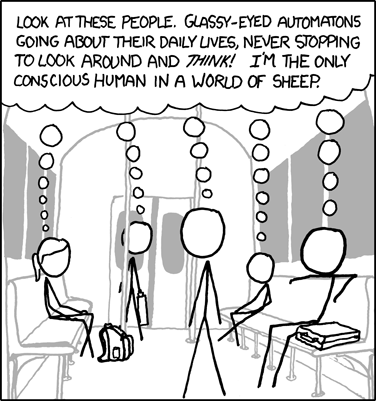
 In another lifetime, I wrote scathing social and political commentary. In fact, it’s still viewable on this site when it began in 2010. Then, I was a part of prideful, independent critical thinkers. Wolves compared to the unthinking sheep of the world.

I imagine everyone thinks along a similar line…

I’d written two books about it: one a compilation, the other all me. For fun, I went back and talked to my younger self about what he wrote. Young Ronin wasn’t completely wrong. 

He just hadn’t gone on the journey I had.

2010-12: political and social commentator. When Ronin (younger me) was born. I look at the Facebook commentators and conspiracy theorists online now; even the language is the same as I used then.

Thanks, Facebook Memories, for the reminder.

2012-13: armchair warrior. Read all the defense books, taking martial arts classes—”Expert.” The Dunning-Kruger Effect was in full swing these three years. 

2013: I grew into my name: Ronin, Stoic, and Prodigal. Ended the year as a Samurai. (I think of it as starting out in Avengers like armor with Ronin kanji on the shoulder pads the previous year, to a simple t-shirt with it on the sleeves, to no branding) That’s just my mental image.

Then my life fell apart, and I started following Jesus. However, I never lost this knowledge and experience. 

2014: Gap-filling servant, apologist, student, and evangelist. What I studied shifted. Cracks in my knowledge were filled. 

2015: I searched for a purpose: to help the broken, challenged, and the unsure to live for Jesus. I’ve focused more on the last two in hindsight. My personal goal was loving people and actually making friends.

2016-2019: I focused on leadership, becoming a better one, yet never feeling like one. I usually don’t feel competent enough for a long time with my personality, but when I do, it feels effortless. 

Now my focus is being a dad. 

As I age, I feel like I’m less than I was. The 2014 version feels like the best version of me. Actually, so far the 2021 version is the best. I keep leveling up. I was a know-it-all, all-mouth back then; then experience came to me. The knowledge is applied and now second nature, so I don’t realize it.

The late 2013/2014-2015 version was very hungry for God, though. I miss that.

The thing is, you don’t lose what you were. It’s there to be tapped into. Except now, with experience, it’s become wisdom. 

So if I don’t take a course of action, it’s not because I’m an unthinking sheep. It’s because I’ve thought it through and decided against it. I can’t die on every hill or fight every battle. Nor can I waste energy being outraged and offended, or waste the time to fact-check every person’s opinion or news story.

Pastor Tim Keller put it like this: “Your future self will always see your present self as unwise and immature. That means, by your own standards, you are currently a fool right now.”

Chew on that.

Vance vs Ronin Part 1

Vance vs Ronin Part 2

Friday, July 16, 2021

The Portent; A Book Review

 The sequel to Michael S. Heiser’s Facade follows almost immediately after the first. It’s called:

The Portent (Façade Saga #2)

“Ancient conspiracy. Relentless evil. The hunt for answers continues.

The climactic ending of The Façade left Brian Scott and Melissa Kelley with only each other—and the terrible secrets they carry. The Portent finds them living under new identities, their future clouded by constant fear of being exposed. By the time Brian and Melissa learn they’re being watched, their carefully constructed lives will be over.

Follow Brian and Melissa into the center of an unthinkably vast, centuries-old conspiracy, conceived to turn the faith of millions against itself. Revelations from ancient tombs, long-forgotten Nazi experiments, UFOs, occult mythologies, biblical theology, and godlike technologies converge in answer to a terrifying question: Now that “they” are here, what do they want?”

Still pursued by The Colonel, Brian and Melissa cross paths with another mysterious group of people. I spent a while trying to figure out who they are and the leader I was way off about. 

This book is also heavy on exposition and follows the same pattern as the first, wrapping up theology, thriller, the paranormal, and actual conspiracies that were proven (like MK Ultra). 

It ends in a direct confrontation with The Colonel, a new mystery, and a riddle. 

The book was hard to put down, and Heiser is finishing up the third one now. I have no idea where he’s going with it next. 

Five stars.

Monday, July 12, 2021

The Big Picture

 I have a pet peeve. 

It’s one-verse devotionals that are either twisted out of context or don’t even apply. I’m not surprised at Biblically illiterate nonbelievers; it’s when believers don’t have the big picture of the Bible and where we fit in it.

The short version is the world was perfect, and then it went to crap. That’s a theological term, by the way. Jesus fixed it and is giving everyone a chance to join him before it’s all made perfect and new. 

Bible history is full of humans messing up, and God punishing them and restoring them. 

In the Garden of Eden, mankind tried to be like God, and they were exiled, and it went downhill from there. 

Heavenly spirit beings mated with humans, evil spread, and God had to flood the place. But he rescued Noah. 

Then there was the Tower of Babel. Man, in his hubris, decided to try to reach God and pull Him down from the throne. 

God scattered humanity, dividing the nations between His subordinates in the spiritual realm, giving them admin permission. 

Then he called Abraham out of modern-day Iraq to go to modern-day Israel.

Famine drove that family to Egypt. After that generation died out, they were enslaved. God rescued them, working mighty miracles and showing Egypt’s gods who was boss. 

During the exodus, factions rebelled, were punished, and in the end, only Joshua and Caleb were left of the first generation. 

The second generation did well, but after Joshua died…well, read the book of Judges. 

Rebellion->punishment->restoration. Repeat.

When Israel became a monarchy, it only made it through two kings before falling back into the pattern. Solomon started worshiping his wives’ gods, his kids continued, and the kingdom was split into two. 

The two nations rebel against God, are punished, then restored when a good king brings reformation until God ends up exiling everyone to Assyria and Babylon. 

They get to come back to Israel, and then God gets quiet for 400 years. That’s the Cliff Notes version of the Old Testament. 

Then John the Baptist comes and says the Messiah is coming. Jesus hits the scene, and the restoration process begins for the final time. 

People are exiled from the Kingdom of God because they don’t follow the king, but the king is calling them back. When all who would come back have returned, the rebels will be locked away and everything made new. 

That’s the Cliff Notes version of the New Testament. 

Personally, it feels like we’re in the time of Judges. Everyone is so tribal, and people do whatever they want because they don’t answer to anyone. 

Adam Savage from Mythbusters once quipped, “I reject your reality and substitute my own.

People have taken that concept to heart. Anything objective or transcendent is rejected if it doesn’t fit their desires. Subjective relativism rules the day. 

It’s not a new thing, though, as we’ve looked at in this post. One day we will all get the ultimate reality check when Jesus returns. 

The Way, the Truth, and the Life will burn away all that is false, and everything will be exposed. 

Where are you in this cycle?

Friday, July 9, 2021

The Façade; A Book Review

 It’s rare for me to read fiction. I’ve reviewed quite a few of Michael S. Heiser’s nonfiction works, fascinated with his work on the rebellious spirit beings from the Fall. In a podcast, he said his fiction told the story of one way the world could be manipulated by the spiritual forces of evil. 

So I had to read it…

The Façade (Façade Saga #1) by Michael S. Heiser

“Haunted by his parents’ death and his career failures, Dr. Brian Scott has begun to settle for the life he’s been given.

Until he’s “recruited,” that is.

Kidnapped by military insiders known as “The Group,” Brian joins a team of world-class scholars working on an above-top-secret initiative. Their mission? To prepare mankind for a new reality. “They” are here.

Among Brian’s fellow recruits are the beautiful yet hostile Dr. Melissa Kelley and the enigmatic Father Andrew Benedict, whose prophetic nature clashes with Brian’s paranoia. As the team is briefed on the government’s involvement with extraterrestrials, strange things begin to happen. Disappearances. Visitations. Murder. Something isn’t right.

The closer Brian and the team get to the truth, the more they realize that no one is safe and no one can be trusted.

Unpeeling layer after layer of deception and counter-deception, Brian moves toward a shocking revelation that will forever alter how mankind sees itself.”

It’s fiction, so no highlights. However, I used to be utterly fascinated with conspiracies, UFOs, aliens, and cryptids. I often scared myself silly as a kid, and I hate to admit, a young adult after watching the movie Signs.

This blends together theology, science fiction, along with what Heiser calls “small c conspiracies” that have been proven.

One reason I probably liked it so much is it is heavy on exposition and figuring out the deal with the Colonel and the mysterious “Adam.” It’s part of a series, and I’ll review the latest one next. 

Monday, July 5, 2021

Satan's Strategy

 In planning, you always have a strategy and the tactics to make something happen. So whether it’s life, work, politics, warfare, or even spiritual warfare, you’ll have a strategy to be successful. 

I was taking the scenic route to work when a thought struck me right between the eyes. Satan’s current strategy is the same as initially.

“He said to the woman, “Did God really say, ‘You must not eat from any tree in the garden’?” Genesis 3:1

That’s aimed at believers. If you don’t believe in God, then you shouldn’t care what He says. However, if you do care, that’s the Holy Spirit working on you. God is after you to bring you to Him. 

I digress. Rationalization is a powerful tool, even with black and white issues. We play with the meanings of words to rationalize what we want.

Jesus said love your neighbor as yourself. He was then asked, “Who is my neighbor?”

“Did God really say…?”

Progressive Christianity is the latest result of the question “Did God really say?” Reworking what they don’t like based on feeling.

We do it daily, usually with our pet sins. I have a sharp tongue, but God says I cannot praise Him and curse my neighbor.

“Did God really say?”

Looking at culture now, it seems to be the answer is “no, He didn’t” or “I don’t care.”

Individuals can’t change culture, only themselves, but that person joins a group of like-minded individuals to make some waves. 

It starts with me and you looking at our pet sins or personal idols and asking the Devil’s question.

Did God really say?

Then if the answer is “Yes, He did,” turn away and ask forgiveness because God said a lot of things. Such as you’re a new creation, and new creations aren’t trapped in the old ways. (2 Corinthians 5:17)

That’s what God said of believers.